BUILDING EUROPE’S CAMPUS FOR GLOBAL HEALTH

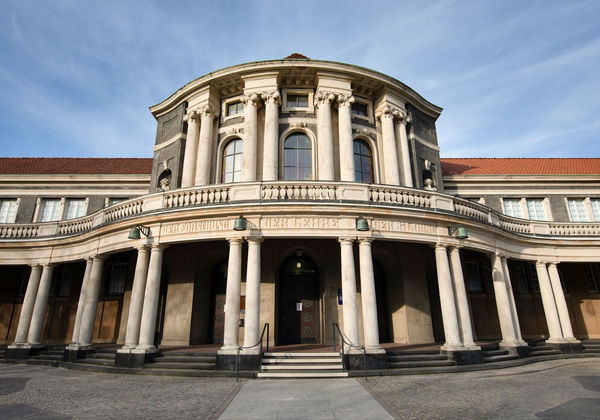
As northern Germany’s largest institution for research and education, the University of Hamburg fosters the learning and research of over 42,000 students and doctoral researchers. Approximately 5,800 research staff work and collaborate on projects across multiple campuses and in transdisciplinary locations such as Science City Hamburg Bahrenfeld, showcasing the university’s strong network in the Hamburg region and beyond.
Recognized as a national University of Excellence in 2019, the University of Hamburg strives to model transformation, particularly with regard to digitalization and sustainability, and to generate innovation through cooperation.
The University is known for its outstanding basic research, applied, and transfer research projects. Its clusters of excellence and core research areas have gained international recognition in a number of fields, including physics, climate research, manuscript cultures, neurosciences, and infection research.
Sustainable cooperation distinguishes the Hamburg research landscape. PIER PLUS, our regional network, is 22 institutions strong and promotes high-level collaborative research. Interdisciplinary projects and international collaborations help the University of Hamburg and its partners create tomorrow’s research.

The University of Hamburg offers approximately 170 degree programmes within its eight faculties:
- Faculty of Law
- Faculty of Business, Economics and Social Sciences
- Faculty of Medicine
- Faculty of Education
- Faculty of Humanities
- Faculty of Psychology and Human Movement Science
- Faculty of Mathematics, Informatics and Natural Sciences
- University of Hamburg Business School
The University is also home to several museums and collections, such as the Zoological Museum, the Herbarium Hamburgense, the Geological-Paleontological Museum, the Loki Schmidt Garden and the Hamburg Observatory.
For enquiries, please contact