Date
2 Mar 2026 15:00 - 6 Mar 2026 13:30
Location
Alcalá, Spain
Host university
University of Alcalá (UAH)
Mode
Physical
WP
WP 3
Target groups
PhD students
Duration
Up to 1 week in length
Reference code
EUG2_T3_6_0151
Type of event
Course
Recognition
Transcript of records - ECTS
Language
English
Recruitment of participants
Qualitative Assessment
Number of open spots
27
Is eligible to international certificate
Yes
Evaluation criteria
40% - Academic / Professional Merit
30% - Motivation
30% - Language
Isced fields of study
02 - Arts and humanities,
0222 - History and archaeology,
028 - Interdisciplinary programmes involving broad field 02: Arts and humanities,
0714 - Electronics and automation
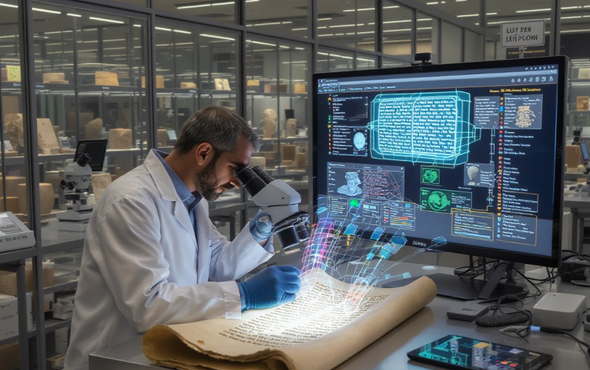
Showcase of digital strategies applied to ancient studies: databases, image management using AI, OCR, digital restoration, NLP.
We will focus on three fields:
- Digital aspects of Ancient Egyptian hieroglyphic texts: OCR, text mining, semantics.
- Museum artefacts’ study and practice: conservation, analysis, data.
- Material aspects of texts from ancient cultures: analyses of media (stone, parchment, etc.) and techniques (carving, inking)
Researchers from Hamburg Universität- Centre for the Study of Manuscript Cultures will also teach some sessions.
Prerequisites: Education in humanities, digital humanities or digital technologies.
Number of ECTS: 2
Location University of Alcalá (UAH) and Museo Arqueológico Nacional, Madrid
Content and Methodology
This course employs a mixed-methods approach, combining theoretical analysis, digital technology approaches, and case-based learning. Key methodologies include:
- Lectures and Readings: Foundation in digital and material philology, data management, computer vision, natural language processing and applied artificial intelligence.
- Digital Modeling and Analysis: Use of digital tools to manage, analyse and visualise written documents of ancient times. Students engage with algorithms and evidences to understand the mechanics and implementation of digital tools to ancient documents.
- Case Studies: Real-world examples with ancient documents of different nature, including ancient Egyptian wooden coffins inscribed with monumental and cursive hieroglyphs and Latin inscriptions on different hard media (stone, ceramics, metal) to illustrate how digital techniques apply to actual documents. Cases encourage students to critically assess the strengths and limitations of different techniques and methods in practice.
- Simulations and Group Exercises: Hands-on activities on digital images of real documents and databases of texts from antiquity to help students experience the material and digital philology approaches’ dynamics, fostering practical understanding of theoretical concepts.
- Discussion and Peer Review: Regular discussions and peer feedback sessions enhance critical thinking and allow students to reflect on diverse viewpoints and approaches within material and digital philology contexts.