Date
6 Oct 2026 09:00 - 8 Oct 2026 17:00
Location
Online
Host university
University of Novi Sad (UNS)
Mode
Online
WP
WP 2
Target groups
Master students,
PhD students,
Undergraduate students
Duration
Up to 1 week in length
Reference code
EUG2_T2_1_0182
Type of event
Course
Recognition
Transcript of records - ECTS
Language
English
Recruitment of participants
Qualitative Assessment
Number of open spots
40
Is eligible to international certificate
Yes
Evaluation criteria
100% - Motivation
Isced fields of study
0521 - Environmental sciences,
0712 - Environmental protection technology
This interdisciplinary course is crafted for students ready to dive into the science, policy, and innovation behind managing water resources in a changing climate.
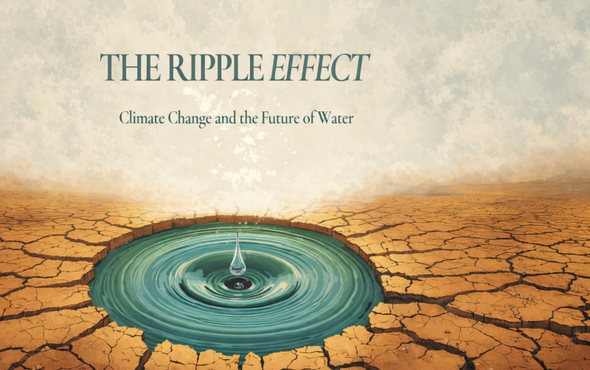
Climate change is reshaping water systems across the globe. The Ripple Effect: Climate Change and the Future of Water offers a comprehensive exploration of how river flows, groundwater, floods, droughts, and water quality are affected by rising temperatures and extreme weather events.
Combining scientific fundamentals with real-world case studies, the course provides students with practical tools to understand and address water-related challenges. Participants will examine European and global governance frameworks—including the EU Water Framework Directive—and explore how effective policies can support sustainability, resilience, and equitable water access.
Number of ECTS: 2
Course syllabus (link)
Course program (link)
Content and Methodology
Through course participants will equips with the scientific knowledge, policy insights, and practical tools needed to understand and respond to water-related climate challenges.
Key Topics:
- Hydrological cycle: river systems, groundwater, floods, and droughts.
- Water pollution
- Climate extremes and their impact on water resources.
- Water resource management in the context of climate change.
- Policies and governance frameworks
- Urban water planning and sustainable infrastructure.
- Managing water in resource-limited and vulnerable communities.
- Transition from reactive to preventive water management.
- Water, health, and sustainability in the era of global climate challenges.
Upon successful completion of the course, students will be able to:
- Explain and demonstrate understanding of the fundamental principles of hydrological cycle, including river flows, groundwater systems, floods, and droughts, and describe how these processes are affected by climate variability and change.
- Apply scientific and analytical methods to assess the impacts of climatic extremes-such as storms, and prolonged droughts-on water availability, quality, and ecosystem health.
- Analyze different approaches to sustainable water resource management, identifying effective strategies for balancing environmental and social priorities in changing climatic conditions.
- Evaluate key water governance and policy frameworks, including the EU Water Framework Directive, national adaptation strategies, and international environmental agreements, in terms of their effectiveness and implementation challenges.
- Design innovative and context-sensitive solutions for urban water planning and management in resource-limited or climate-vulnerable communities, emphasizing preventive and adaptive measures.
- Integrate scientific, policy, and ethical perspectives to assess the interconnections between water management, global health, and sustainable development, recognizing water as a determinant of public health and social equity.
- Collaborate effectively in interdisciplinary and multicultural teams to develop and present evidence-based proposals addressing real-world water and climate challenges.