Annual Summit 2026: Collaboration for Global Health Innovation
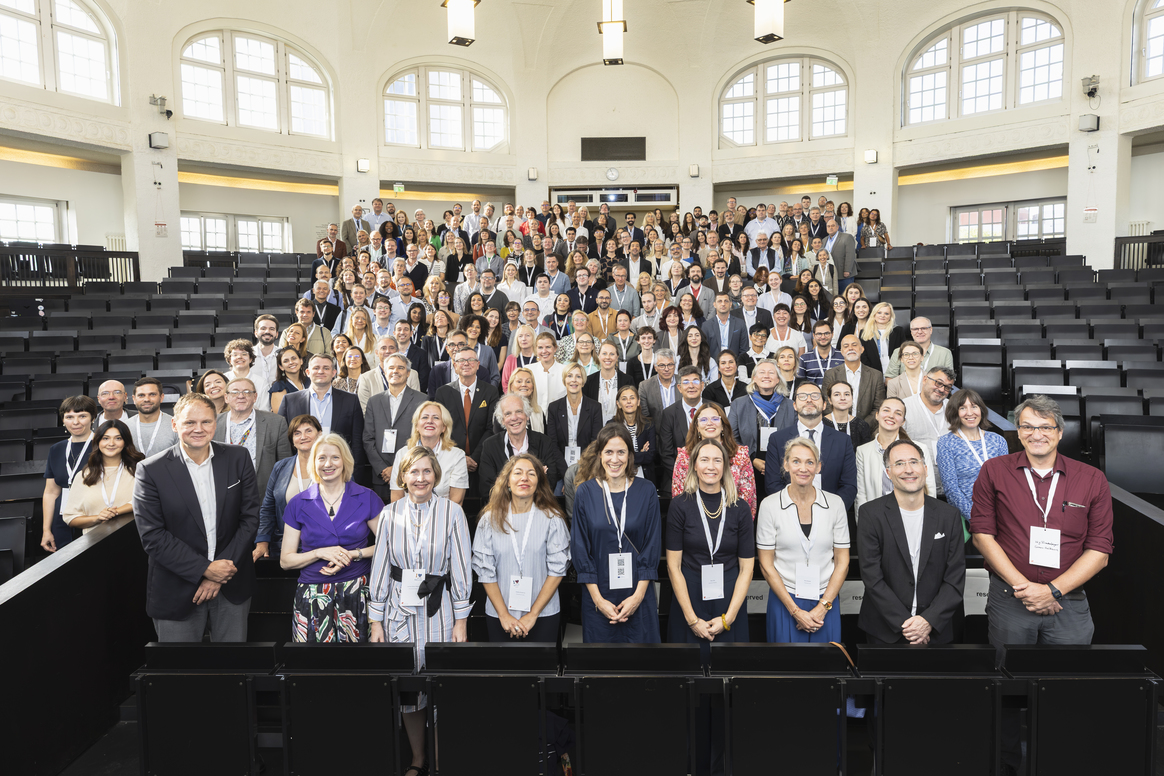
Beginning with an opening session at the University of Hamburg’s Von-Melle-Park campus in the centre of the city, the Summit featured welcome speeches from Hauke Heekeren, president of the University of Hamburg; Delphine Placidi-Frot, vice president for International and European Relations of the Université Paris-Saclay; and Margarida Lima Moreira, a representative of the EUGLOH International Student Board.
The Summit’s themes were reflected in the speakers’ opening remarks, which underlined the responsibility that universities have to society – and to doing their part in addressing societal challenges – and thus also concretely highlighted the importance of the real-world application of research. The speakers also emphasised the critical role of international collaboration as part of this process. President Heekeren encouraged participants at the Summit to make use of the unique opportunity provided by the event itself to connect with others in attendance who may be able to provide different perspectives from outside one’s usual circle.
The panel discussion that followed, “Beyond Boundaries: Rethinking Innovation at the Crossroads of Disciplines and Sectors,” provided concrete examples of how dialogue and collaboration between varying scientific disciplines, industry partners and public institutions can help turn research ideas into societal impact. Moderated by Hamburg Invest, the city’s business services agency, it featured panellists from the University of Hamburg, Siemens Healthineers and the University Medical Center Hamburg-Eppendorf.
The first day of the Summit continued with parallel workshops and panel sessions, with workshop leads and panellists from across the EUGLOH Alliance and the European Universities initiative. Workshops covered topics such as “Language, Health and Intercultural Communication,” “Not Just Give and Take: Co-Creating Transformation Through Service Learning,” and “Fostering Careers in Global Health.” The afternoon panel sessions, “From Teaching to Belonging,” “One Campus, Global Perspective: The Role of Student Health Management in Shaping the Universities of Tomorrow” and “Co-Creating Health Resilience: Citizens and Science in Dialogue,” brought in further perspectives on a range of topics related to teaching and learning.
The day concluded with a lively networking session entitled “Discover the EUGLOH Hub: Meet the Alliance Universities,” during which all EUGLOH member universities – including the University of Amsterdam as the Alliance’s newest member – presented their institutions’ profiles, history and highlights. A quiz with prizes encouraged attendees to engage with each of the stands and learn more about each university as well as about the EUGLOH Alliance itself.
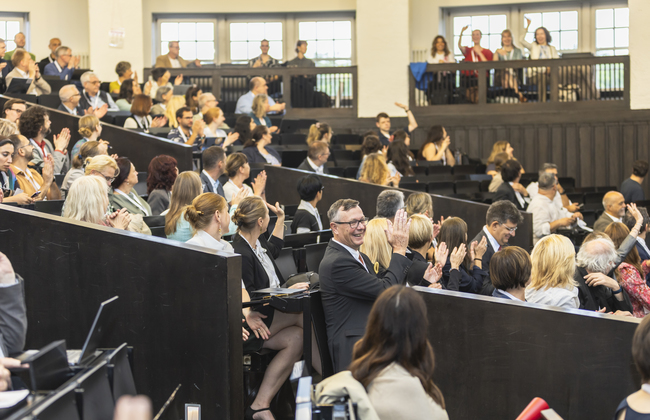
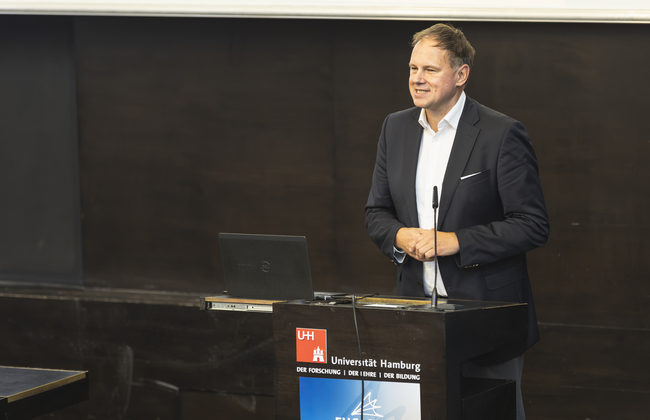
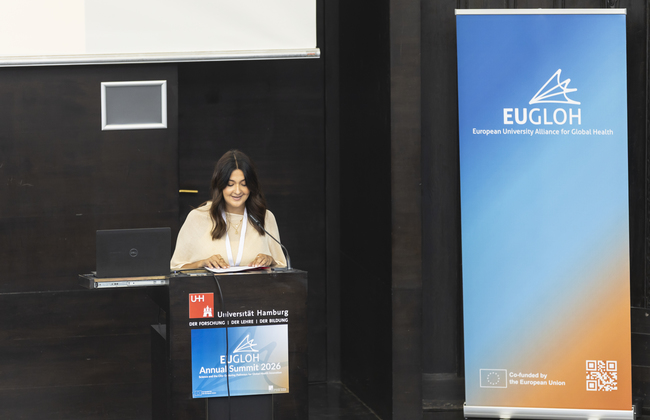
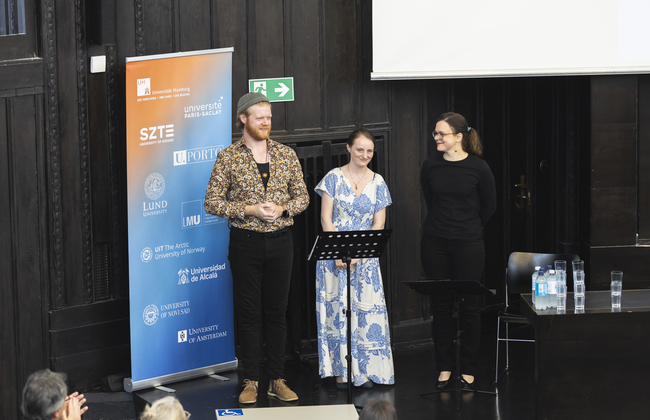
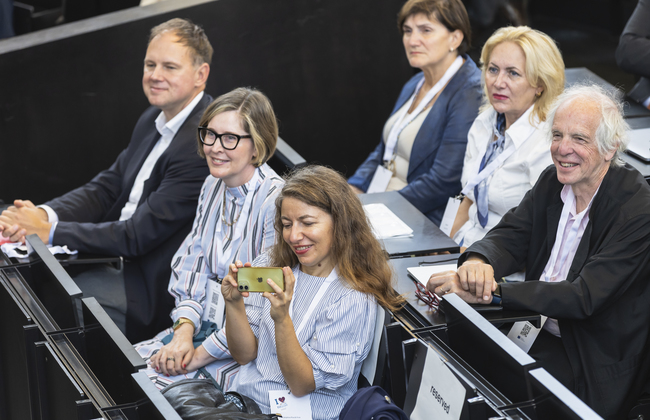
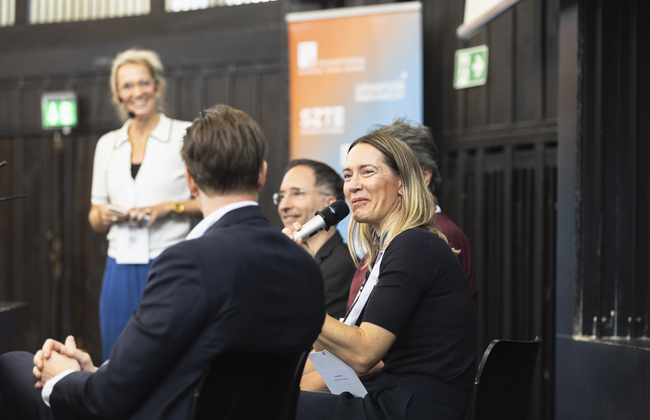
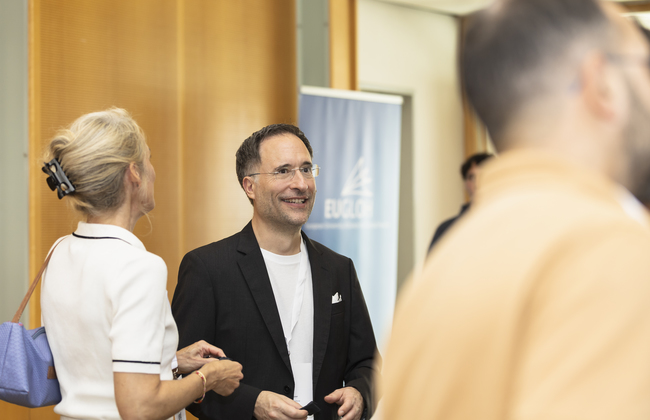
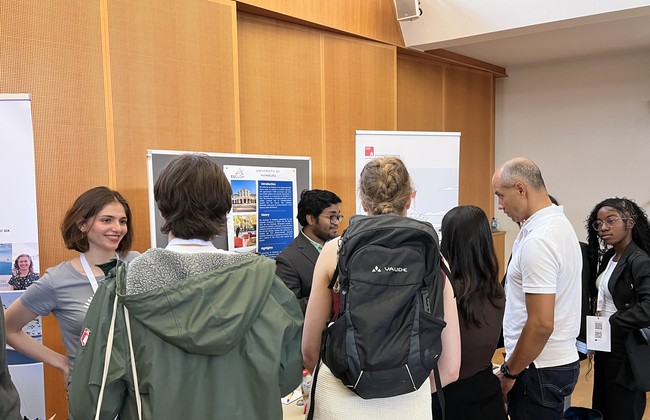
Photo credits: UHH/Esfandiari, EUGLOH
For its second day, the Summit moved to the research campus Science City Hamburg Bahrenfeld, of which tours were offered following the Summit. In the lecture hall of the world-renowned Deutsches Elektronen-Synchrotron (DESY), welcome addresses and keynote speeches from Beate Heinemann, chairperson of the DESY Board of Directors; Blanche Schwappach-Pignataro, dean of the Faculty of Medicine at the University Medical Center Hamburg-Eppendorf; and Julia Fitzner, Unit Head Collaborative Analysis at the World Health Organization, helped embed and connect the global health expertise within EUGLOH to perspectives within the Hamburg research ecosystem and well beyond. The following Q&A session touched on several topics, including the collaborative data platforms provided by the WHO.
The programme continued at the Center for Free-Electron Laser Science (CFEL) and nearby locations such as Light & Schools, with research-related workshops covering topics such as healthy communities and shared solutions, immersive media for health, a structural approach to pathogens and entrepreneurial journeys in the life sciences. A class from a Hamburg school also joined in, playing a board game developed through a EUGLOH Living Lab with other Summit participants.
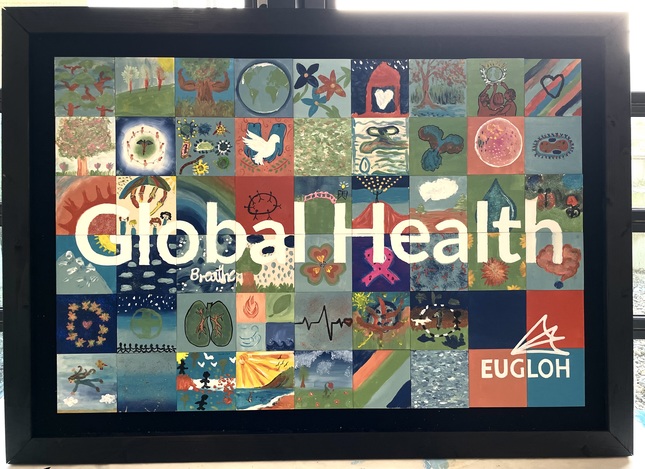
In the light-filled atrium of the striking CFEL building, participants also took part in a “Paint and Connect” activity, a “creative station” that enabled Summit attendees to create a collaborative group painting. The resulting artwork reflected both the diversity of the EUGLOH Alliance as well as participants’ wide-ranging associations with the topic of global health – all coming together in a unique and colourful image.
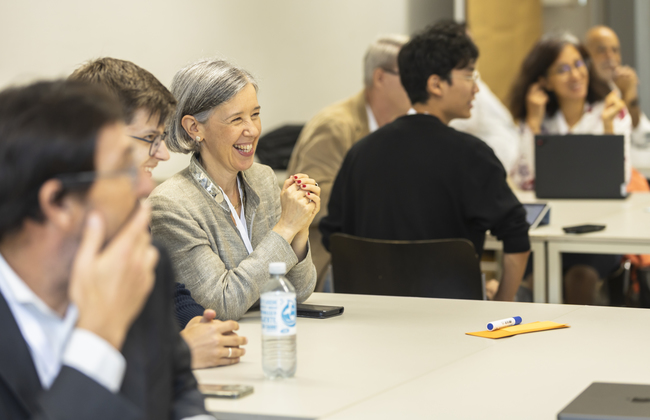
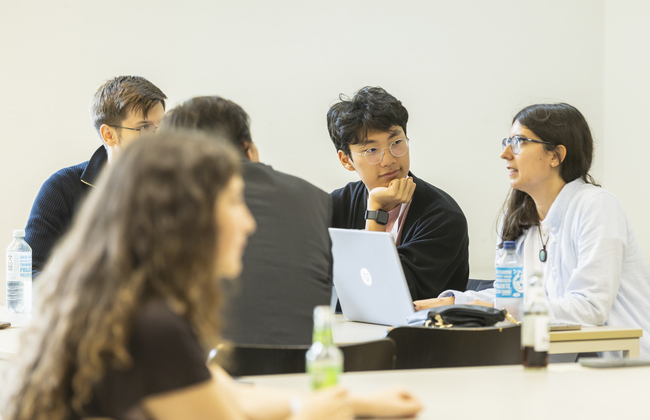
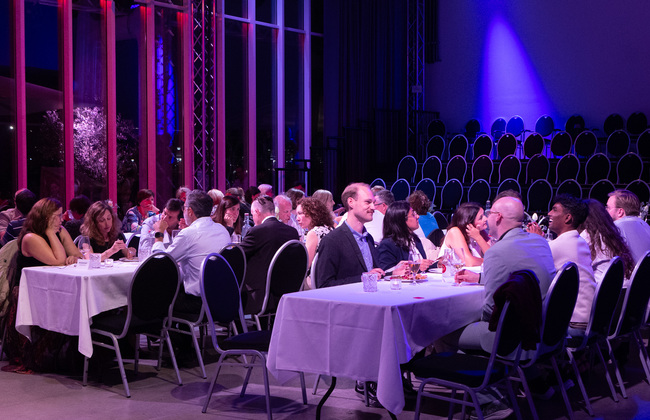
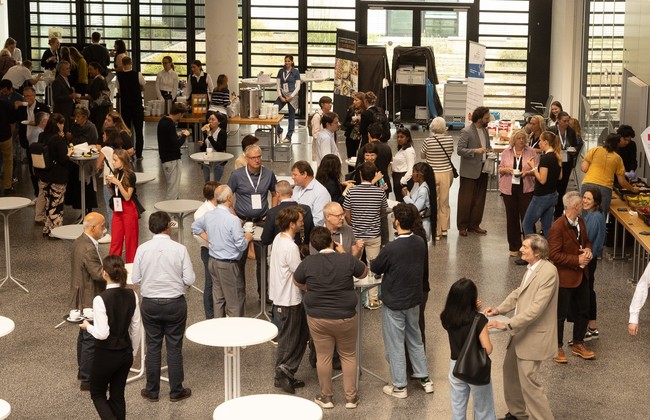
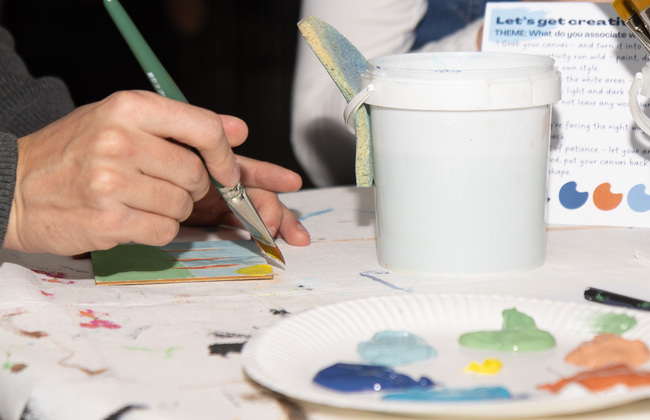
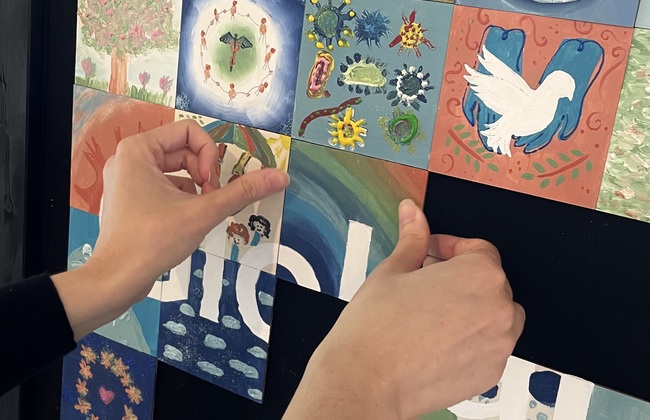
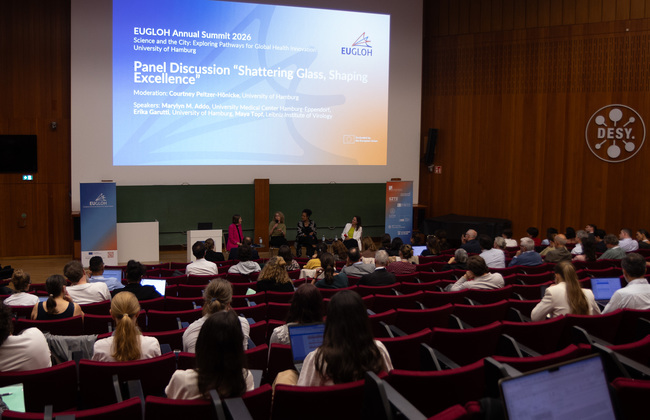
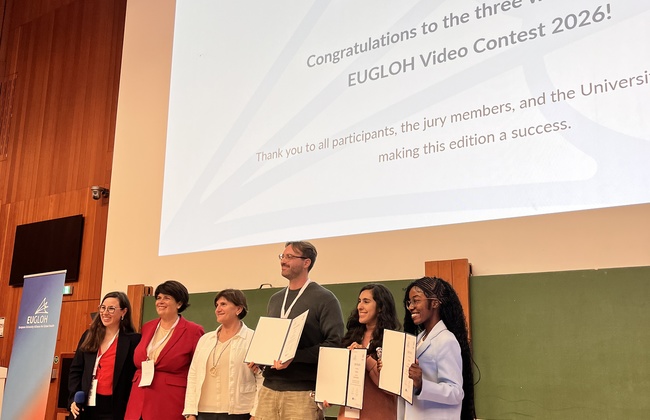
Photo credits: UHH/Esfandiari, UHH/Szobries, Paint & Connect, EUGLOH
The Summit closed with a final session that included the panel discussion “Shattering Glass, Shaping Excellence,” which was moderated by Courtney Peltzer-Hönicke, head of the Department of International Affairs at the University of Hamburg, and brought the personal perspectives of three leading scientists to the Summit’s ongoing reflection on the importance of diverse perspectives and backgrounds in research and innovation. The panellists underlined the value of teamwork and shared purpose in driving excellence.
“Each one of us has some excellent aspects in their research and some flaws or some parts which are maybe not excellent. The sum of us is something very special,” said Erika Garutti from the Institute of Experimental Physics of the University of Hamburg. “I think the team makes the excellence in the end.”
Marylyn M. Addo from the Institute for Infection Research and Vaccine Development at the University Medical Center Hamburg-Eppendorf echoed those views in her response to a question about how to make science better. “I think science gets better when you have different perspectives,” she said. “If you have those perspectives and they come together to work together and unleash the passion and fire for this one question, that’s when science gets really excellent – and better.”
In her closing remarks, the EUGLOH Secretary-General Emily Helmeid also spoke about the importance of viewing oneself as working within a much larger team that includes both those who came before, perhaps a mentor or teacher, as well as those who will come after, such as students or colleagues. And above all, to recognise in every moment along that timeline: “We didn’t get there alone.”
The closing session reflected the central message of this year’s Summit: that excellence in research and innovation is built through collaboration, complementary strengths and the coming together of different perspectives from both science and the city along the path to shared goals.