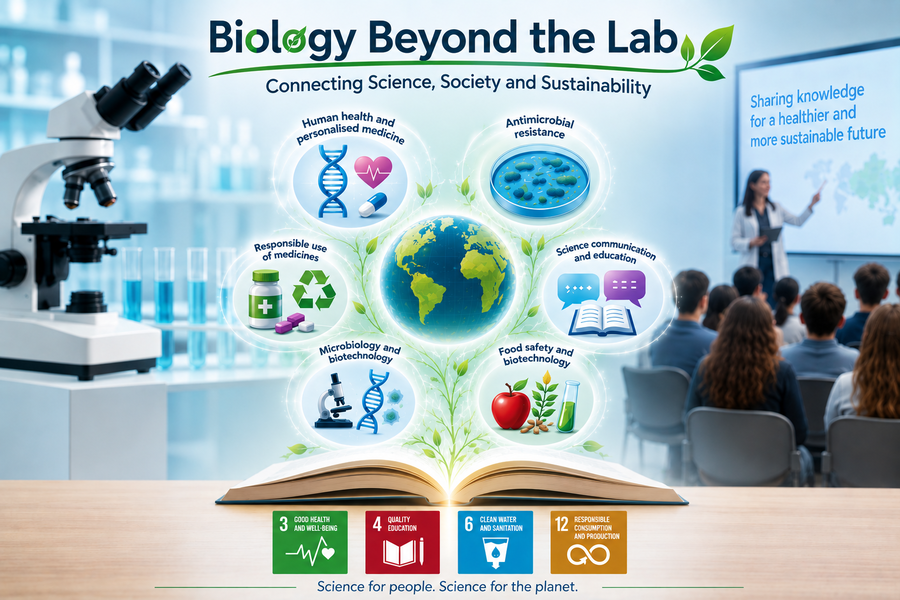
Biological sciences are transforming the way we understand health, the environment, and the challenges facing our planet. Advances in genetics, microbiology, pharmacy, biotechnology, and environmental sciences are helping us develop more sustainable solutions to improve human well-being while protecting natural ecosystems. Yet many of these scientific advances remain unfamiliar or difficult to understand for the wider public.
Biology Beyond the Lab is a science communication initiative that aims to bring biological knowledge closer to society by making complex scientific concepts accessible, relevant, and engaging. As members of the EUGLOH community, we have the opportunity not only to learn from research but also to share its value beyond the university. Whether as students, researchers, or professors, we can all contribute to strengthening the connection between science and society.
Science communication plays a fundamental role in promoting sustainability. Public talks, educational workshops, and accessible communication materials—such as articles, infographics, short videos, or social media content—can help explain how biological sciences influence our everyday lives and contribute to addressing global challenges. These activities also provide students with valuable opportunities to develop their science communication skills by connecting their knowledge with the real needs and challenges of society and actively engaging with their communities.
Rather than focusing on a single discipline, Biology Beyond the Lab embraces the diversity of biological sciences. Topics such as responsible medicine use, antimicrobial resistance, personalised medicine, emerging pollutants, and biotechnology illustrate how biological knowledge contributes to healthier people, healthier ecosystems, and more sustainable societies.
By promoting scientific literacy, curiosity, and critical thinking, this initiative seeks to empower citizens to make informed decisions and better understand the connections between science, health, and the environment. Improving access to reliable scientific information also helps combat misinformation and encourages greater public engagement with sustainability challenges.
This initiative supports several United Nations Sustainable Development Goals, including Good Health and Well-being (SDG 3), Quality Education (SDG 4), Clean Water and Sanitation (SDG 6), and Responsible Consumption and Production (SDG 12).
By taking biology beyond the laboratory, we can inspire curiosity, strengthen trust in science, and help build a healthier, more informed, and more sustainable future.
This work has been carried out by Lidia Ruiz Llorente and Sergio Ruiz Llorente, as Principal Investigator of the UAH Teaching Innovation Projects UAH/EV1547, UAH/EV1674 and UAH/EV1805, together with the other members of the Teaching Innovation Group INDOBIO UAH-GI21-169.
Professor Lidia Ruiz Llorente is a biologist at the University of Alcalá with an academic and research background in human health, with a focus on biomedical research.