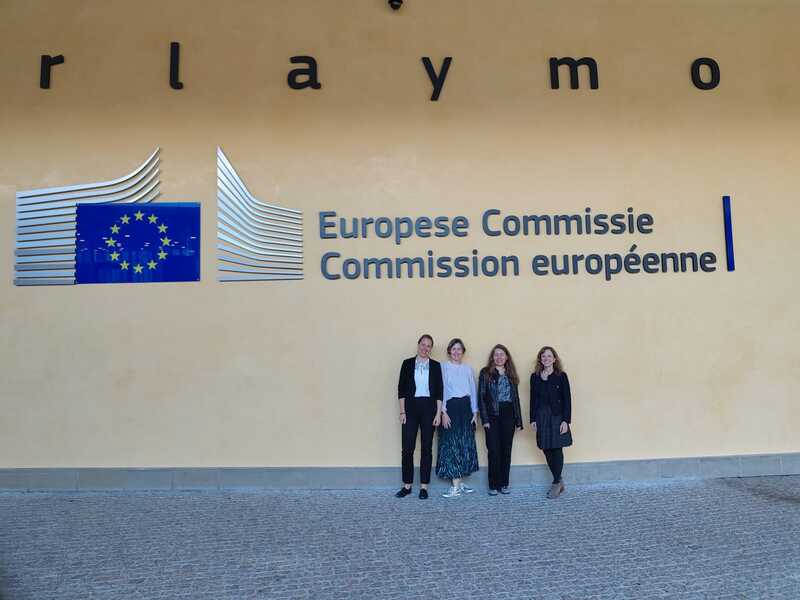
EUGLOH in Brussels: Discussing the Future of European Universities Alliances
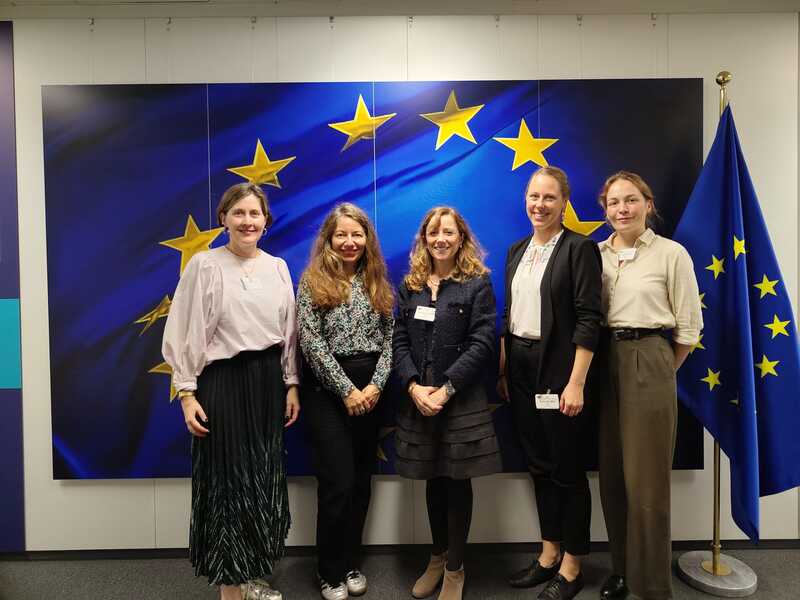
The EUGLOH delegation brought together Courtney Peltzer-Hönicke, representing the University of Hamburg as EUGLOH’s presiding university in 2026; Francesca Biagini, representing Ludwig-Maximilians-Universität München as it prepares to take over the EUGLOH presidency in 2027; Delphine Placidi-Frot, representing Université Paris-Saclay as coordinator of the core EUGLOH Erasmus+ project; Emily Helmeid, Secretary-General of EUGLOH and Vice-Chair of FOREU4ALL; and Anouk Deana, Policy Advisor & External Affairs Officer for EUGLOH.
Reflecting on the visit, Francesca Biagini highlighted the value of engaging at this stage of the negotiations, since the meetings offered an opportunity to better understand how discussions are progressing at different levels of the European institutions even if decisions have not yet been made.
Erasmus+ and Universities’ Role in the Next MFF
At the European Parliament, the delegation met with Katarzyna Biniaszczyk, parliamentary assistant to MEP Bogdan Andrzej Zdrojewski, rapporteur for the Erasmus+ programme for 2028–2034.
The exchange provided an opportunity to discuss the process leading towards the adoption of the next MFF and Erasmus+ programme, the pressures surrounding the future Erasmus+ budget, and the possible place of European Universities Alliances within the programme.
The discussion also highlighted the important role of member states in the negotiations ahead. For universities and alliances, this means that engagement at European level can be complemented by exchanges with national ministries and authorities, helping to ensure that the contribution of Erasmus+ and European transnational university cooperation is well understood throughout the decision-making process.
Universities themselves have a role to play in demonstrating what Erasmus+ enables: an ambitious programme remains essential for European higher education.
How the Next Generation of European Universities Alliances Might Look
The future of the initiative itself was at the centre of the delegation’s exchange with Pierre Laporte from the European Commission’s Directorate-General for Education, Youth, Sport and Culture (DG EAC).
The discussion focused on questions that will need to be addressed over the coming months. How will alliances evolve after 2027? What kind of funding architecture will support them? How will they connect with other European priorities and funding instruments? And how can the initiative move towards greater long-term sustainability while building on the cooperation developed through successive project phases?
Further consultation and conversations are expected as the Commission develops its vision during 2027. These discussions are particularly relevant for EUGLOH as the Alliance enters its next project phase while continuing to work towards a sustainable, long-term model of cooperation across education, research, innovation and service to society.
EUGLOH will contribute to this discussion through its participation in FOREU4ALL, which brings the European Universities Alliances together. The outcomes of a workshop FOREU4ALL held will inform its subsequent dialogue with DG EAC, while EUGLOH also expects to contribute to a forthcoming Call for Evidence. Together, these channels provide an opportunity for alliances to bring their experience and perspectives into the development of the initiative.
For EUGLOH, this discussion is also closely linked to the Alliance’s own long-term planning. As Secretary-General Emily Helmeid reflected following the visit, “we have to be really certain of who we are and what we want.”
European Universities Alliances as Networks for Research Cooperation
The research dimension was explored further during a meeting with Alexandra Hild and Manuel Aleixo from the Cabinet of Commissioner for Startups, Research and Innovation Ekaterina Zaharieva.
For alliances composed of research-intensive universities and partners, the discussion highlighted an important opportunity. The established networks of universities, researchers and international partners that European Universities Alliances have spent years building can provide a strong basis for developing competitive research consortia and pursuing opportunities under Horizon Europe. The exchange touched on potential bottom-up funding possibilities, collaborative research opportunities and instruments supporting capacity building.
The exchange also identified a practical follow-up for EUGLOH. Courtney Peltzer-Hönicke described it as “homework for us”: mapping where EUGLOH universities are already participating together in Horizon Europe consortia, including successful projects. Better understanding this existing track record could help the Alliance identify areas of research cooperation that can be strengthened and provide a stronger basis for future competitive proposals.
Contributing to the European Discussion
The Brussels visit forms part of EUGLOH’s broader engagement with European policy developments, both directly and through FOREU4ALL.
Many elements of the post-2027 landscape remain open. The overall MFF, the future Erasmus+ and Horizon Europe programmes, and the model for the next generation of European Universities Alliances are all still being negotiated or developed. Decisions taken over the coming months will shape the funding and policy environment in which European Universities Alliances operate from 2028 onwards.
By following these developments closely, exchanging with European and national stakeholders, and contributing its experience through FOREU4ALL, EUGLOH aims to ensure that the realities and potential of European Universities Alliances are reflected as the next framework takes shape. In doing so, it also continues to contribute to European discussions defining the next phase of cooperation in higher education, research and innovation.