HAMMUN x EUGLOH: Finding Common Ground for Collaboration
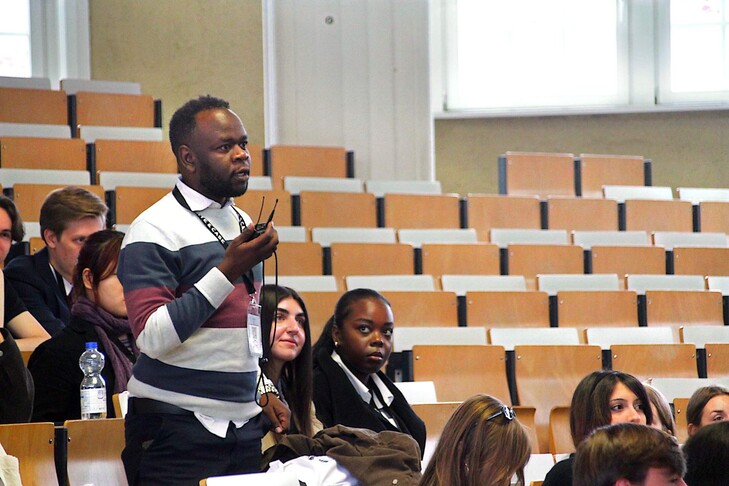
Mohamed Eisa's EUGLOH Story:
Representing Spain, negotiating with different European positions, and searching for common ground showed me that diplomacy is not simply about defending a national interest, it is about finding ways to move forward together. This was one of the most valuable lessons I took from my participation in HAMMUN x EUGLOH at Universität Hamburg from 24–27 September 2026.
During the simulation, I was part of the EU Council, where I represented Spain in discussions on the transition towards renewable energy and European energy security. I advocated for greater use of the renewable energy potential of the Iberian Peninsula to strengthen energy stability in Spain and Portugal. I also emphasized the importance of improving energy interconnections between the Iberian Peninsula and France, and from there with the wider European energy network.
The real challenge, however, was not simply presenting Spain’s position. European countries have different energy priorities, and several continue to rely significantly on conventional energy sources. Reaching common ground therefore requires listening carefully, understanding different national interests, negotiating compromises, forming alliances, and building consensus. Experiencing this process firsthand was both challenging and rewarding. It showed me that successful diplomacy depends not only on how strongly you defend your position, but also on your ability to understand others and transform differences into opportunities for cooperation.
Another highlight of the experience was the session with Martin Kobler. Drawing on his decades of experience in diplomacy, peacebuilding, and the United Nations, he brought a valuable perspective to discussions on conflict and international peace. I particularly enjoyed our discussion about wars and conflicts in resource-rich countries, including Sudan, the Democratic Republic of Congo, and Libya. We discussed the complex connections between natural resources, political interests, conflict dynamics, and the challenges of building sustainable peace. As my academic work focuses on poverty, conflict, and human security in Sudan, this conversation was especially meaningful to me.
Beyond the formal sessions, HAMMUN x EUGLOH gave me the opportunity to meet participants from different countries and academic backgrounds, exchange perspectives, and experience the value of international cooperation in a diverse environment.
I left Hamburg with more than new knowledge. I returned with greater confidence in international communication and negotiation, a deeper appreciation of alliance-building and consensus-building, and a stronger understanding of multilateral cooperation. Above all, the experience reminded me that even when interests differ, dialogue can create common ground and common ground can become the starting point for meaningful cooperation.
This text is part of the “My EUGLOH story” series, in which members of the EUGLOH community talk about their EUGLOH experience.