Speaker Spotlight: One Health, One Science – and One Forensics
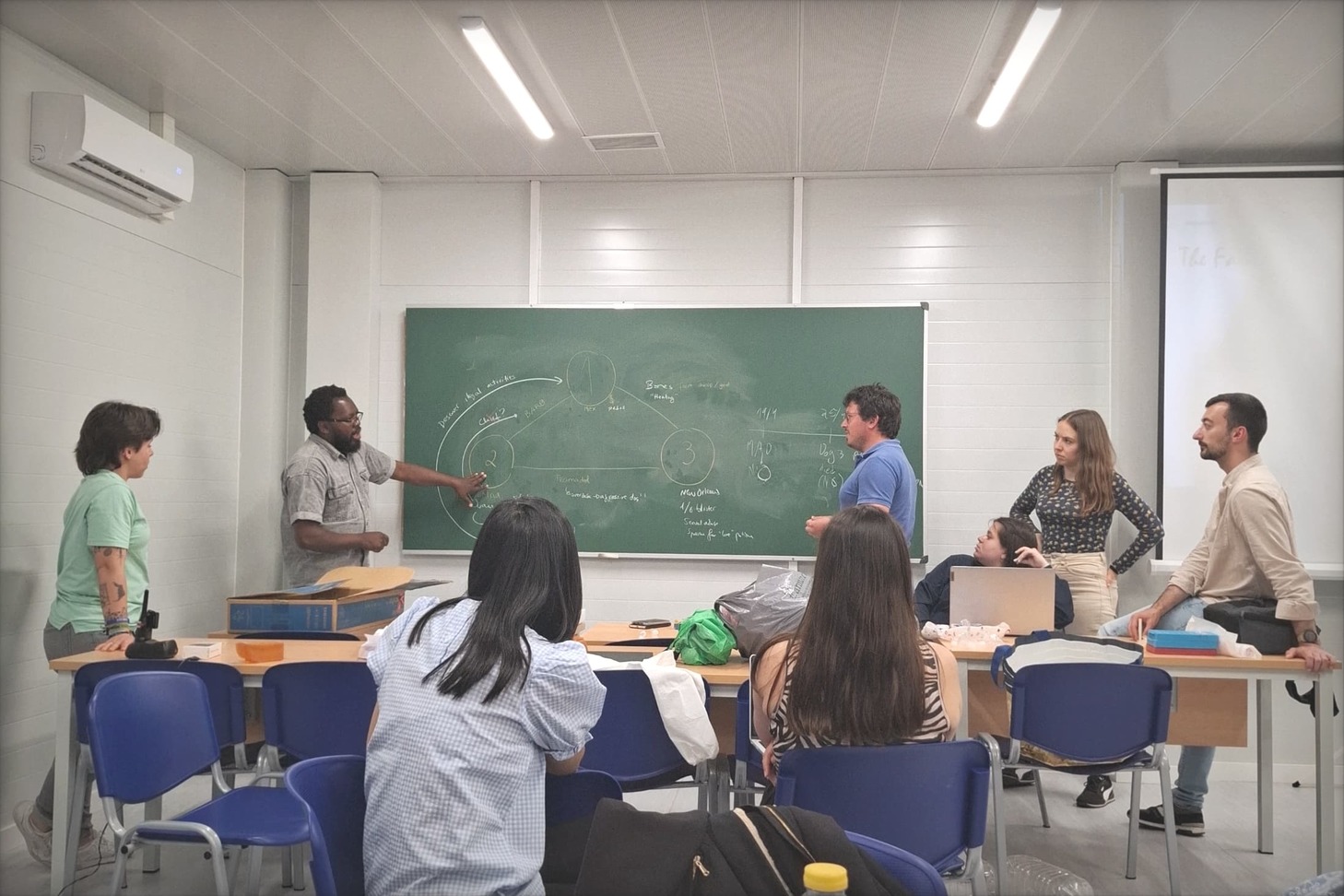
François's EUGLOH Story:
In Spring 2025, I attended the first Crime Scene Investigation (CSI) with Animals training in Alcalá. The experience significantly changed my perspective on animal health, forensic investigation, and interdisciplinary collaboration. Participants came from different universities, countries, and academic backgrounds. For me, it was also an opportunity to translate some of my PhD research findings into practice and to discover how different cultures and disciplines approach challenges related to animals, their health, and welfare.
I can recall three favorite moments. The first was working with my team to delimit a simulated crime scene, which strengthened our teamwork and problem-solving skills. The second was using luminol to reveal traces of blood through its characteristic blue chemiluminescent glow. I was struck by how much information can remain hidden from our immediate perception. Interestingly, Spain experienced a major blackout during our first day. While much of the country was temporarily plunged into darkness, we were learning how forensic techniques can make invisible evidence visible.
My third memorable moment came at the end of the training. We had been divided into three teams, each working independently on a simulated case. Only at the end did we discover that the three cases were connected through transnational organised crime. This was a powerful illustration of the importance of breaking down silos and promoting collaboration. What initially appeared to be three separate problems was actually part of a larger picture. In criminalistics, appearances can be deceiving, and conclusions must be based on evidence rather than assumptions. For me, this illustrated the value of One Health and One Forensics: complex problems cannot always be understood from a single perspective.
The diversity of participants also strengthened my sense of community. Sharing perspectives with people from different countries and disciplines showed me how strongly cultural and legal traditions shape the way animals are perceived and protected. A discussion about the legal status of animals particularly impressed me, especially the potential confusion between objective law and subjective rights. These exchanges showed me that interdisciplinary collaboration requires not only different areas of expertise, but also an openness to understanding how others approach the same problem.
The training also challenged my assumptions about forensic investigation. I had imagined CSI as a highly technical activity requiring special authorisation, extensive laboratory work, and potentially handling animals or their remains. I was surprised to discover that we could learn forensic investigation without physically handling an animal or its remains. Learning about principles such as Locard's exchange principle showed me how observation, reasoning, and apparently small traces can become important pieces of evidence.
As a veterinarian and PhD student in law, the training helped me connect animal health, veterinary medicine, law, public health, forensic medicine, and animal welfare. It also allowed me to establish new collaborations within and outside my university. This led me to join the supervisory team during the second and third sessions, where I am now responsible for the module “Key Legal Concepts in Animal Protection.”
Ultimately, the experience strengthened my belief that protecting animal and public health requires more than a multidisciplinary approach. We need to connect different forms of knowledge and think and act interdisciplinarily. Through CSI with Animals, I experienced the value of overcoming disciplinary silos firsthand and now advocate for “One Health, One Science” and greater recognition of “One Forensics.”
This text is part of the “My EUGLOH story” series, in which members of the EUGLOH community talk about their EUGLOH experience.